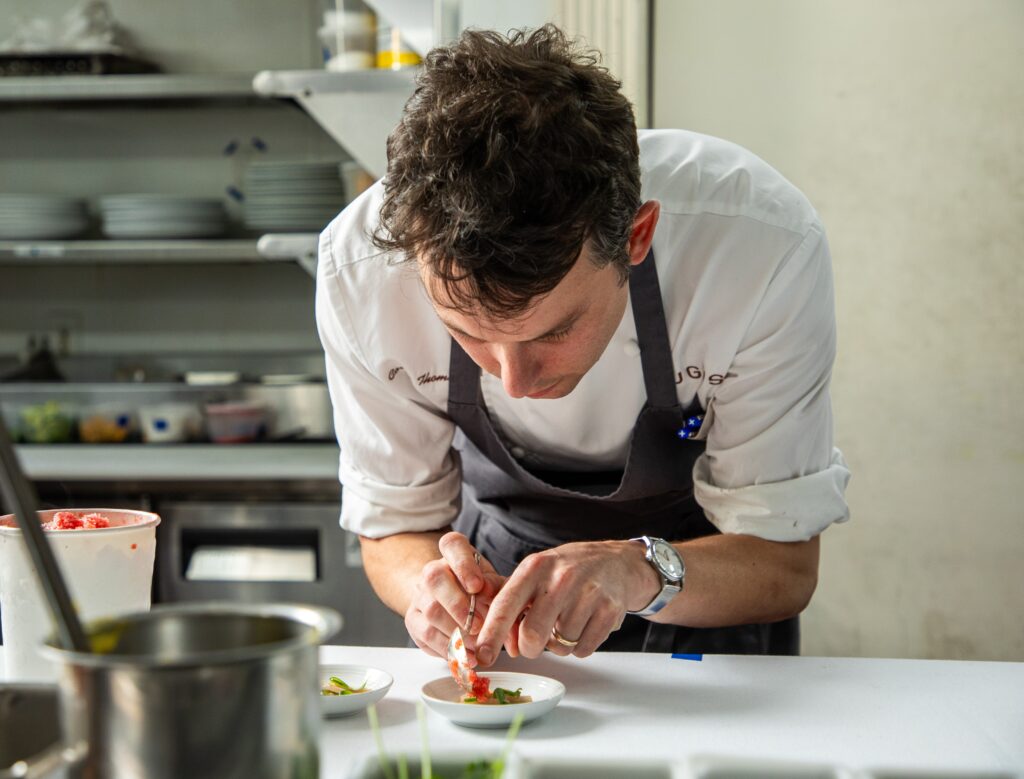
Thomas is proud of the ever-evolving tasting menu at Restaurant August, one inspired by local cuisine, yet presented from a different point of view.
“A lot of people who eat here have a shared story of Louisiana cuisine. How do we elevate it to feel like something different, while still being a nod to our childhood?”
New Orleans loves its BBQ shrimp, a dish originally created at Uptown restaurant Pascale’s Manale in the mid 50s. For locals, a lot of nostalgia is involved when diving into a plate of Gulf beauties served shell-on, swimming in pepper, garlic and butter, tearing off pieces of French bread to sop up the sauce.
Imagine for a moment a different take on this ubiquitous dish. One part of Restaurant August’s initial “fruits de mer” course includes an interesting riff with Binchotan-grilled shrimp tossed in a BBQ sauce reduction transformed into a creamy mousse croustade with rosemary and lemon zest.
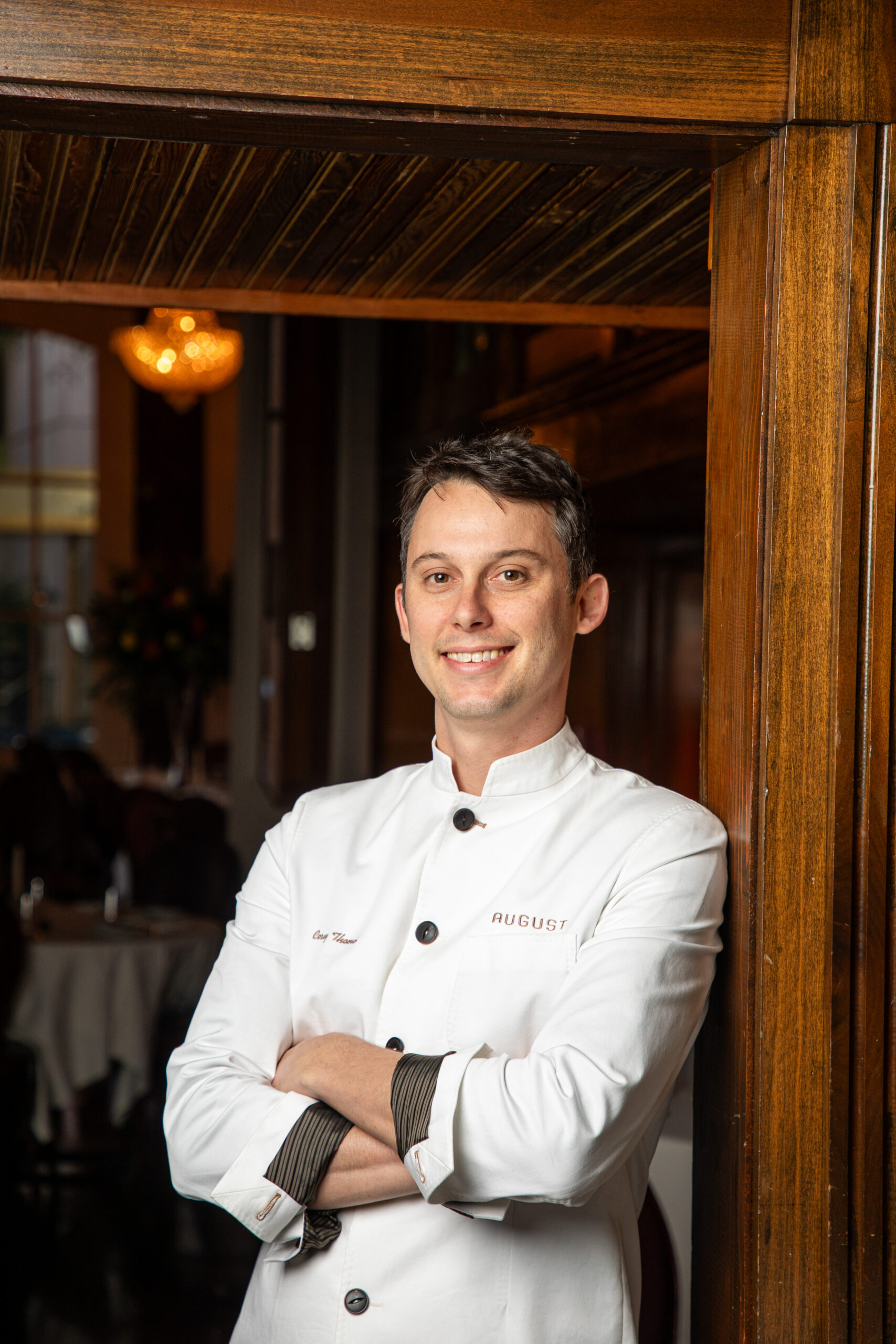
“I like to reinterpret dishes that are the backbone of New Orleans cuisine,” explains August’s Executive Chef Corey Thomas. “The BBQ Shrimp Croustade is different than any bite you’ll have in town, yet at the same time you’ll have familiar flavors.”
Farmed and raised Murder Point oysters are another familiar-but-different component of the fruit de mer course. Delivered fresh from Alabama’s Gulf waters, these buttery mollusks are sprinkled with an exo salt made with dehydrated local tomatoes and Szechuan peppercorns, and drizzled in Steen’s Cane Vinegar.
“It’s waves of different flavors and experiences. What I’m trying to do is inject intrigue, fun and new experiences in every bite.”
Another current element of the fruit de mer course evolves with the seasons, a crudo using spear-caught cobia provided by local fisherman Chris Ricouard of Wicked Seafood. “He brings those in a cooler the day they’re caught and we butcher them and serve it to our guests that same day,” explains Thomas. “We’re really proud of that partnership with him.”
The mildly sweet and buttery flavors characteristic of wild-caught cobia are punched up with a house made “kosho,” a fermented Japanese condiment house made using local blood orange zest, serrano peppers and salt. Thomas finishes the crudo with cucumber, fennel and blood orange vinaigrette.
It’s a bit of a shocker to see the humble cornbread on a chef’s tasting menu, but Thomas’ preparation of the Southern staple is anything but. A souffle-like spoonbread made with cornmeal from Alabama’s Bayou Cora Farms, is served with Rodolphe le Meunier artisanal “beurre de baratte” crafted in Normandy, France (arguably one of the finest butters in the world) and it topped off with Tsar Nicoulai Osetra caviar produced in California.
“[The cornbread] is based on my grandmother’s recipe, it’s what I grew up eating, often with Country Crock,” laughs Thomas. “I feel like there aren’t any parameters around what we do. We want to be local, but we also have the obligation to seek out the best ingredients in the world, and when you put those two things together, you can really have some fun and create some truly exciting dishes.”
Although Thomas has always possessed a love of Louisiana cuisine, he began his career in professional kitchens later in life. Born in Shreveport and raised in Monroe, Louisiana, Thomas studied biology in college and afterwards worked in Alzheimer research. While the work was gratifying, he discovered he didn’t “really love” being in the laboratory.
“I moved to Denver and it would be snowing outside and I would be making gumbo for my friends. They kept telling me I made really great food and that I should be a chef.”
He relented and finally sent in an application to Commander’s Palace, the origin story of so many great Louisiana chefs, and received a call back the next day. Then executive chef Tory McPhail was obviously encouraged by Thomas’ enthusiasm.
“I remember talking about how passionate I was about Louisiana culture and cuisine, and how I wanted to be a steward and to help preserve it,” says Thomas. “I [also] knew I loved working around other people – figuring them out, what drives them, what they’re passionate about – and giving them the tools they need to grow.”
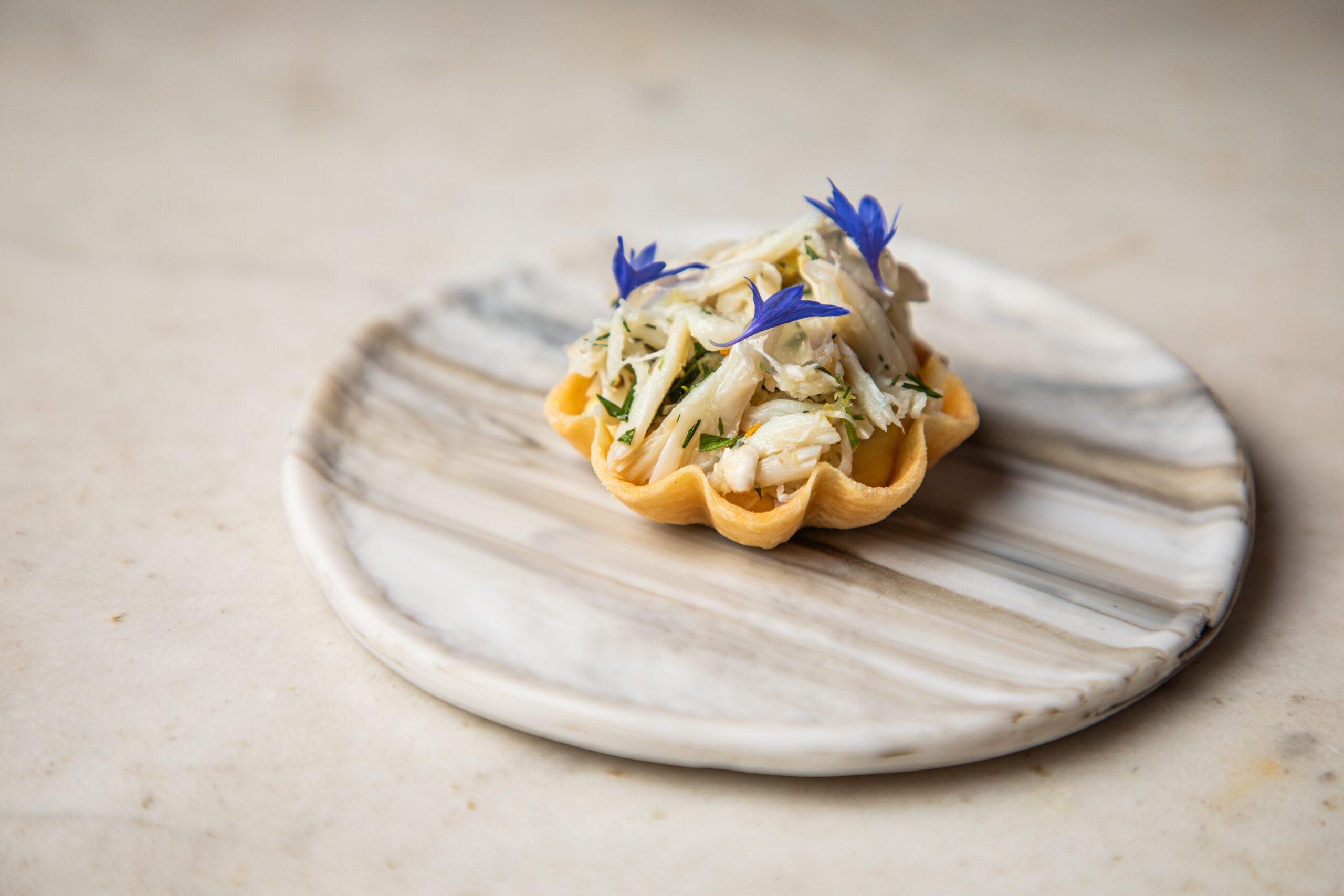
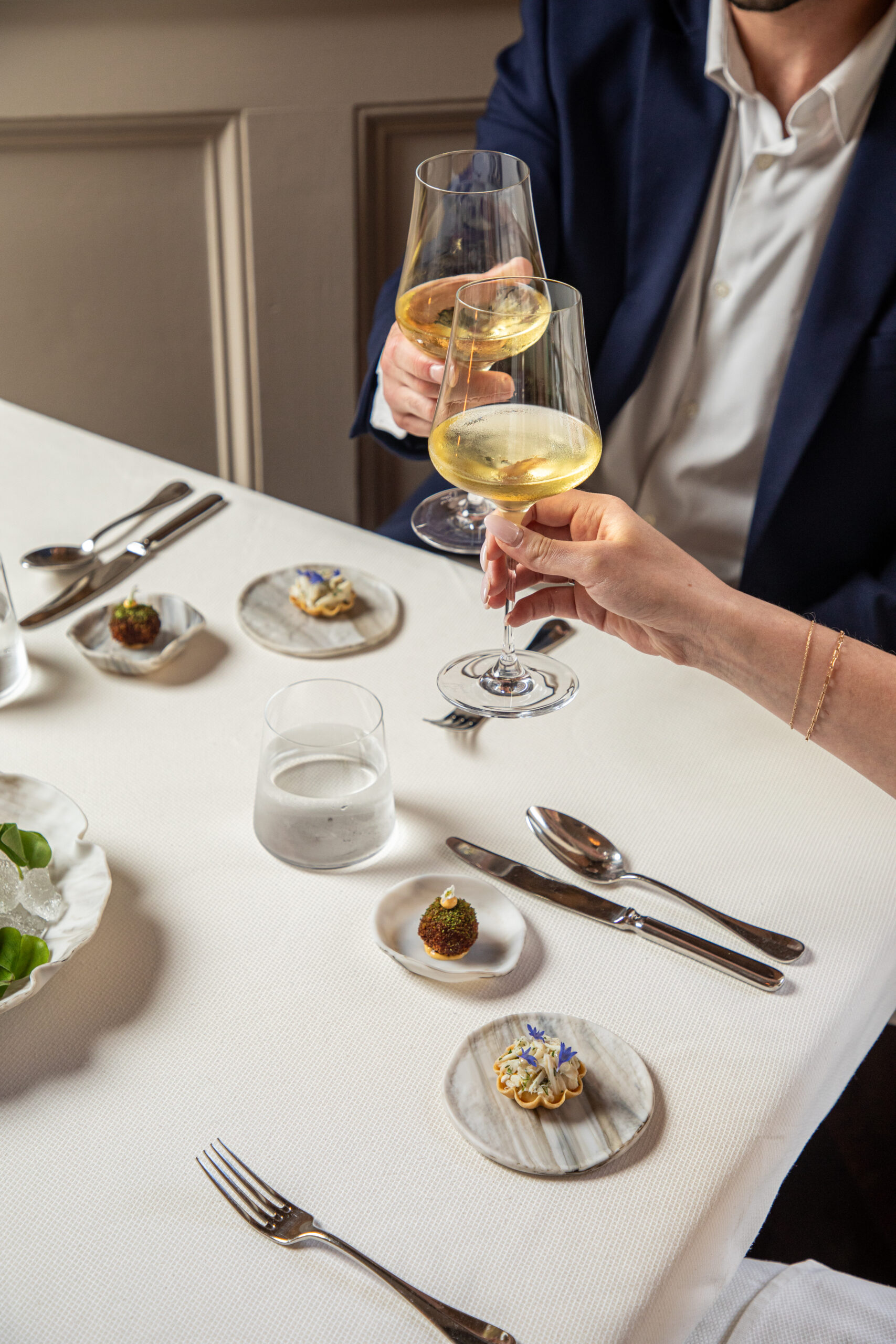
While excitedly discussing his tasting menu, Thomas frequently uses the word “we,” as one fully cognizant of the invaluable contributions from his team. There’s zero hesitation as he touts the blue crab tartlet, a bite created by sous chef Hunter Wilkinson made with jumbo lump crab meat served atop a grilled grouper custard in a pastry shell. “A lot of people say that’s one of their favorite bites,” admits Thomas.
A parade of plates follow the first two courses, from a springtime agnolini stuffed with lactose-fermented ramp and creamy ricotta served with crispy cured lamb belly, sauteed morels and fava beans to a decadent slice of plum syrup-glazed, A5 Wagyu shipped all the way from the Kogoshima prefecture in Japan. “It is a heavily-marbled small cut because it’s so intense. It’s all about the char, marbling, flavor and quality of the beef.”
Before dessert, a palate cleanser reinterpretation of a French 75 is served, lemon sorbet with champagne granita and gelee. “It’s a fun, playful break from all of the intense savory flavors to get you ready for dessert,” says Thomas.
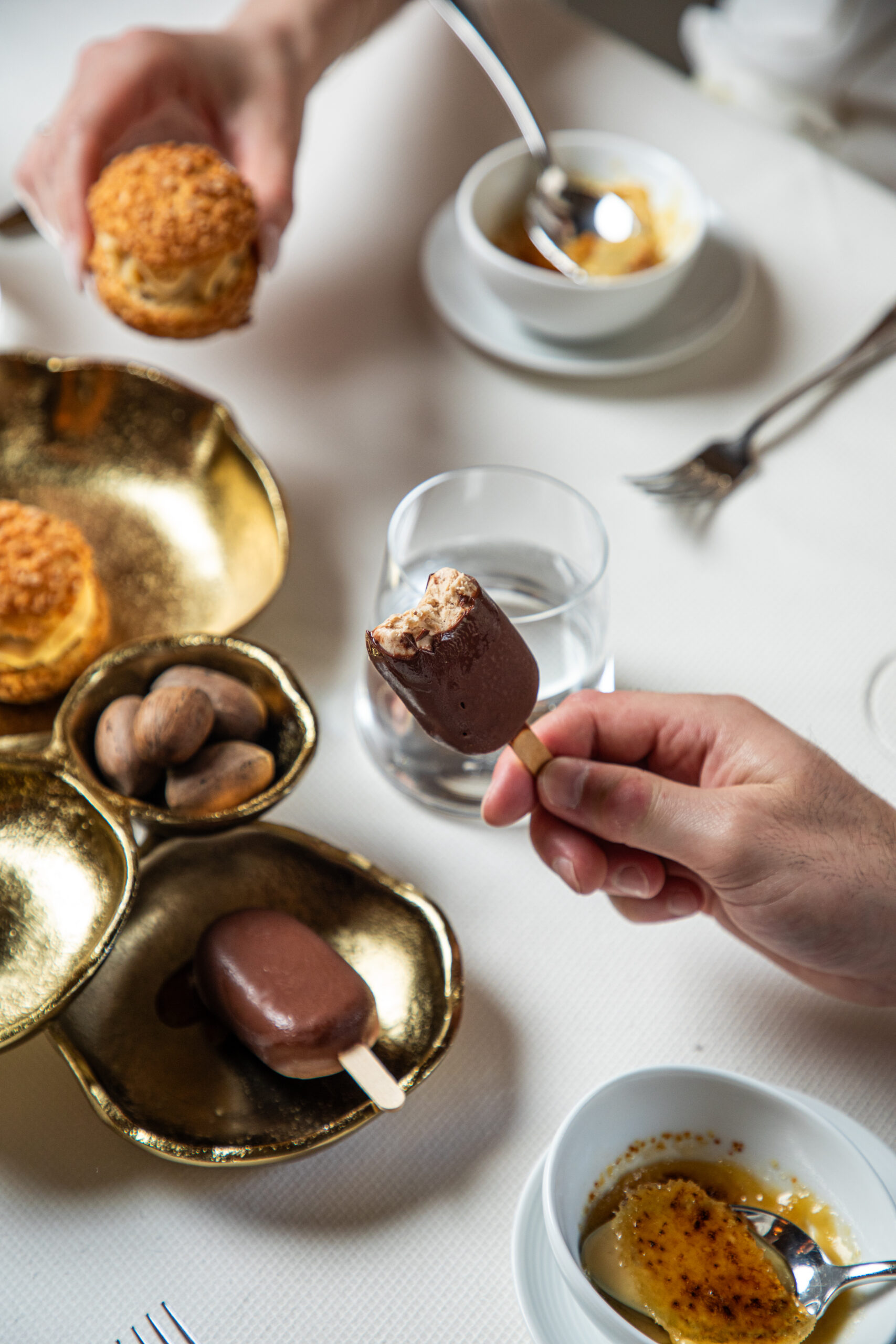
The feast finishes off with a trio of Louisiana-inspired desserts; a pecan and cane syrup profiterole, a cane syrup crème brûlée, and pecan butter ice cream dipped in chocolate magic shell.
“It’s easy to take yourself too seriously, and it’s fun to be playful with the guests and be like ‘Ok, you’ve eaten the best beef in the world and now you’re having a popsicle,” laughs Thomas. “The best dishes remind you of your childhood.”
*This year marks Restaurant August’s 25th Anniversary. The BRG Hospitality flagship has hosted a yearlong series of culinary and cultural activities on the 25th of every month in 2026. Please see restaurantaugust.com for more details.
*Article originally published in the August 2026 issue of Where Y’at Magazine