LGBT+ Archives Project of Louisiana opened a new French Quarter exhibition space this spring, offering a comprehensive – and fascinating – overview of Queer history in New Orleans.
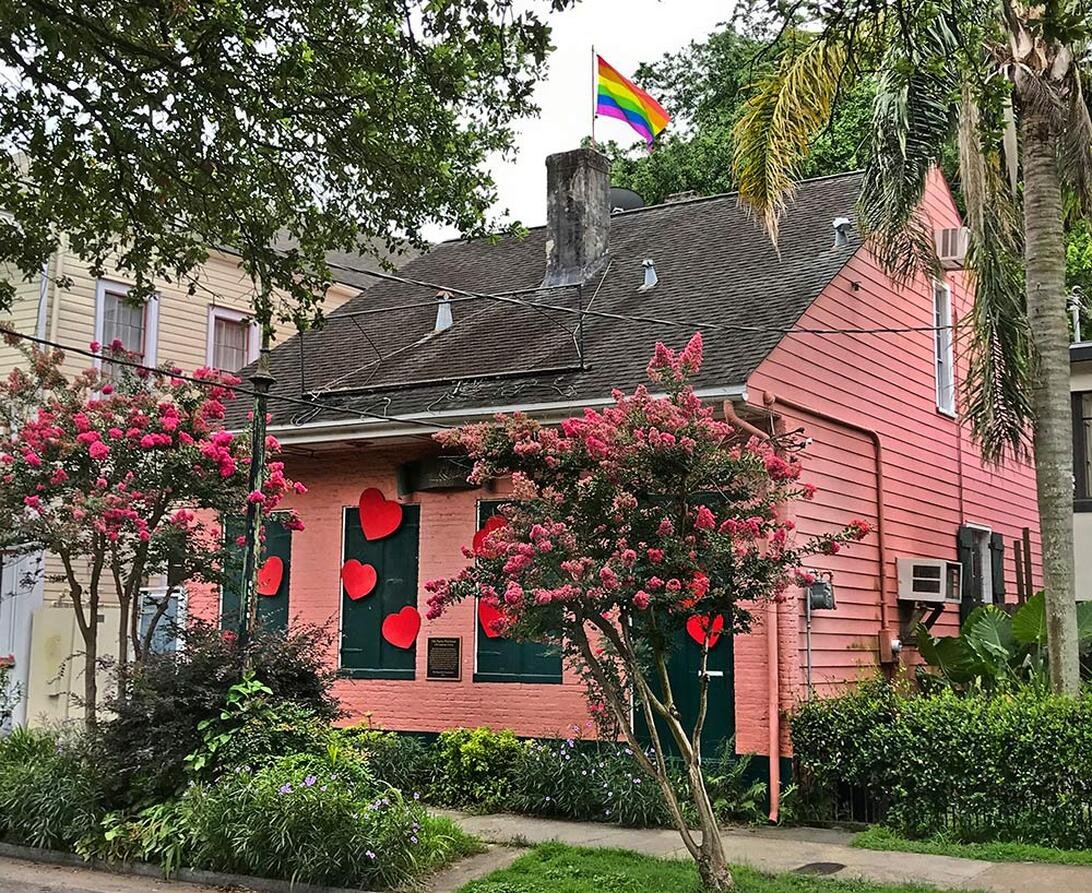
Over a decade ago, Stuart Butler, a veteran political activist for the local LGBTQ+ community, invited a few close friends over to The Faerie Playhouse, a Creole cottage on Esplanade Avenue, for a meeting of the minds. During his 35 years of advocacy, the 83-year old had amassed a considerable collection of materials documenting the French Quarter’s vibrant Queer history.
“He [Butler] said ‘I don’t know what’s going to happen to all of this stuff when I die,’ and he challenged us to start thinking about it,” explains writer and historian Frank Perez.
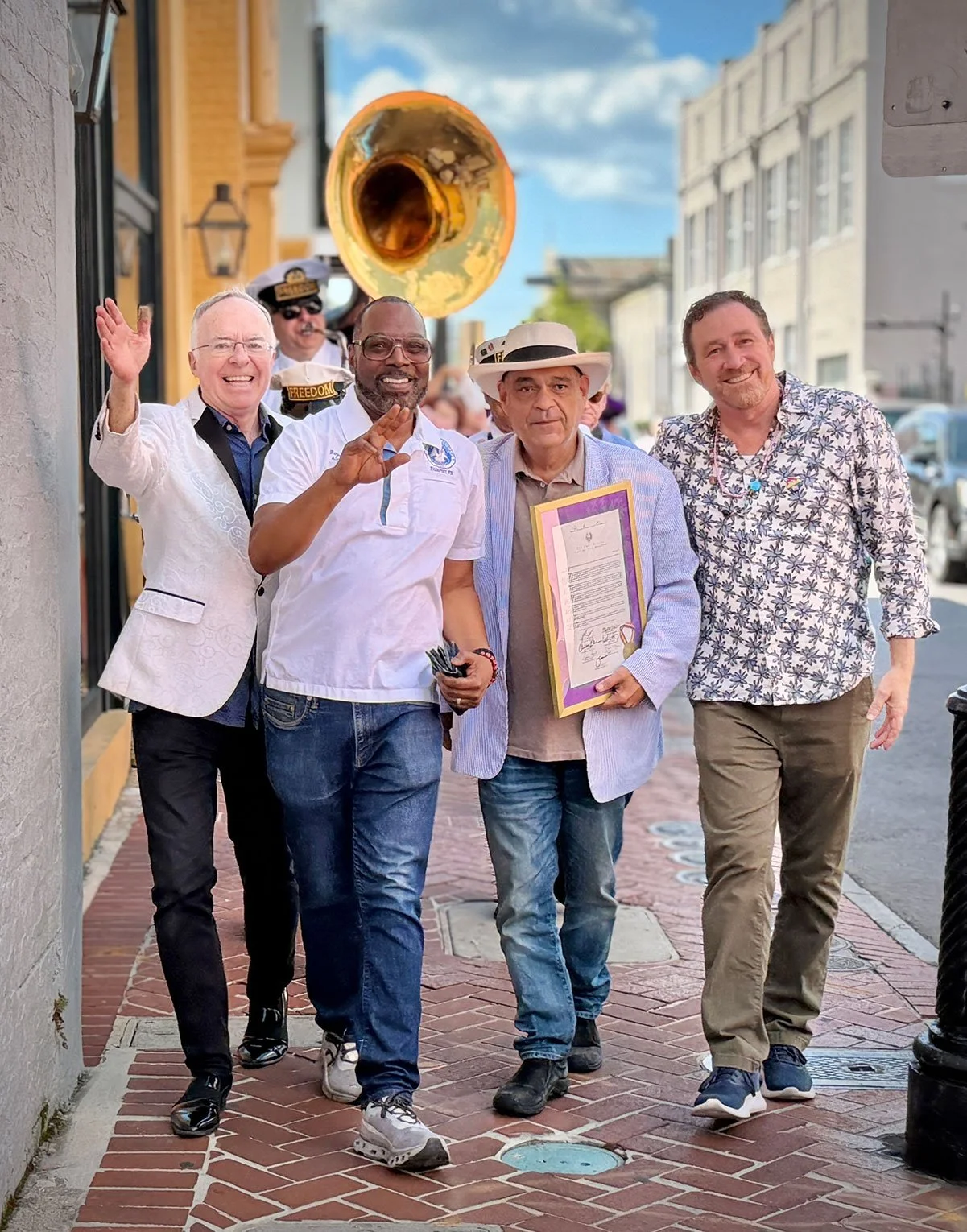
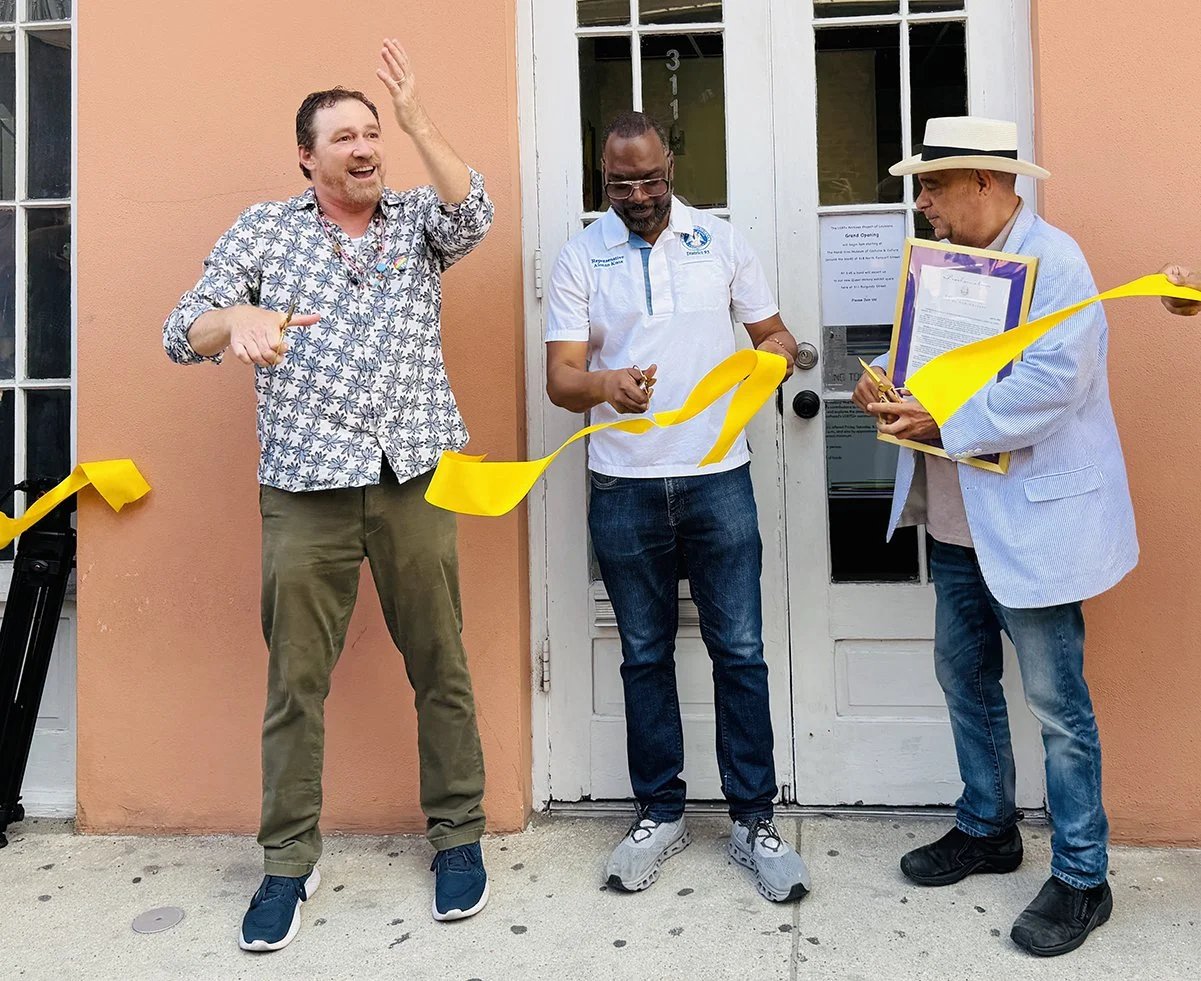
It was in this simple act of preserving a lifetime of documents, newspapers, photographs and other ephemera that the LGBT+ Archives Project of Louisiana was born. Headed by Perez, the collective has grown into an organization dedicated to the safekeeping and placement of materials detailing the history and culture of the Queer community in Louisiana. And in April, they opened an exhibition space at 311 Burgundy Street.
Consisting of large informational panels, the brand new Queer History Exhibit features photographs and short descriptions arranged topically covering everything from Queer journalism and HIV/AIDS to community bars, Gay Carnival and Southern Decadence. There’s also a large, 15-foot timeline of New Orleans Queer history stretching across the back wall.
“We leased the new space in December and we’ve been working on it over the last few months,” says Perez. “We were able to celebrate the grand opening on Saturday, April 11th.”

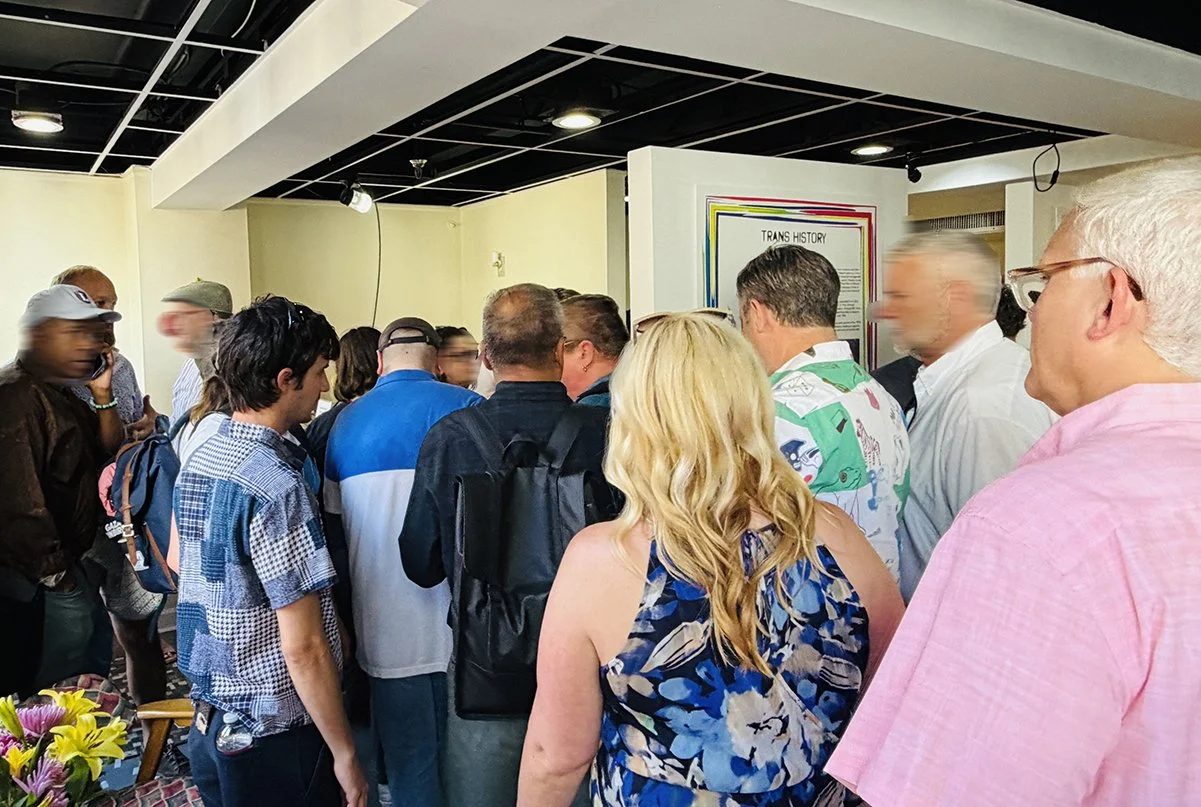
Starting with Butler’s personal collection, Perez began building the LGBT+ Archives Project of Louisiana back in 2013. Call by call, he and other team members reached out to people and organizations in the community, seeking materials to organize and place. But now the information comes to them.
“We’ve been around long enough that people know who we are and they’re contacting us.”
While the organization wears the archival mantle – taking on the crucial task of gathering, documenting and distributing our state’s Queer history – it’s important to remember LGBT+ Archives Project of Louisiana is not a repository.
“We don’t really house anything permanently,” Perez notes. “We only temporarily hold stuff until we can get it scanned. Then we farm it out to institutions around the state.”
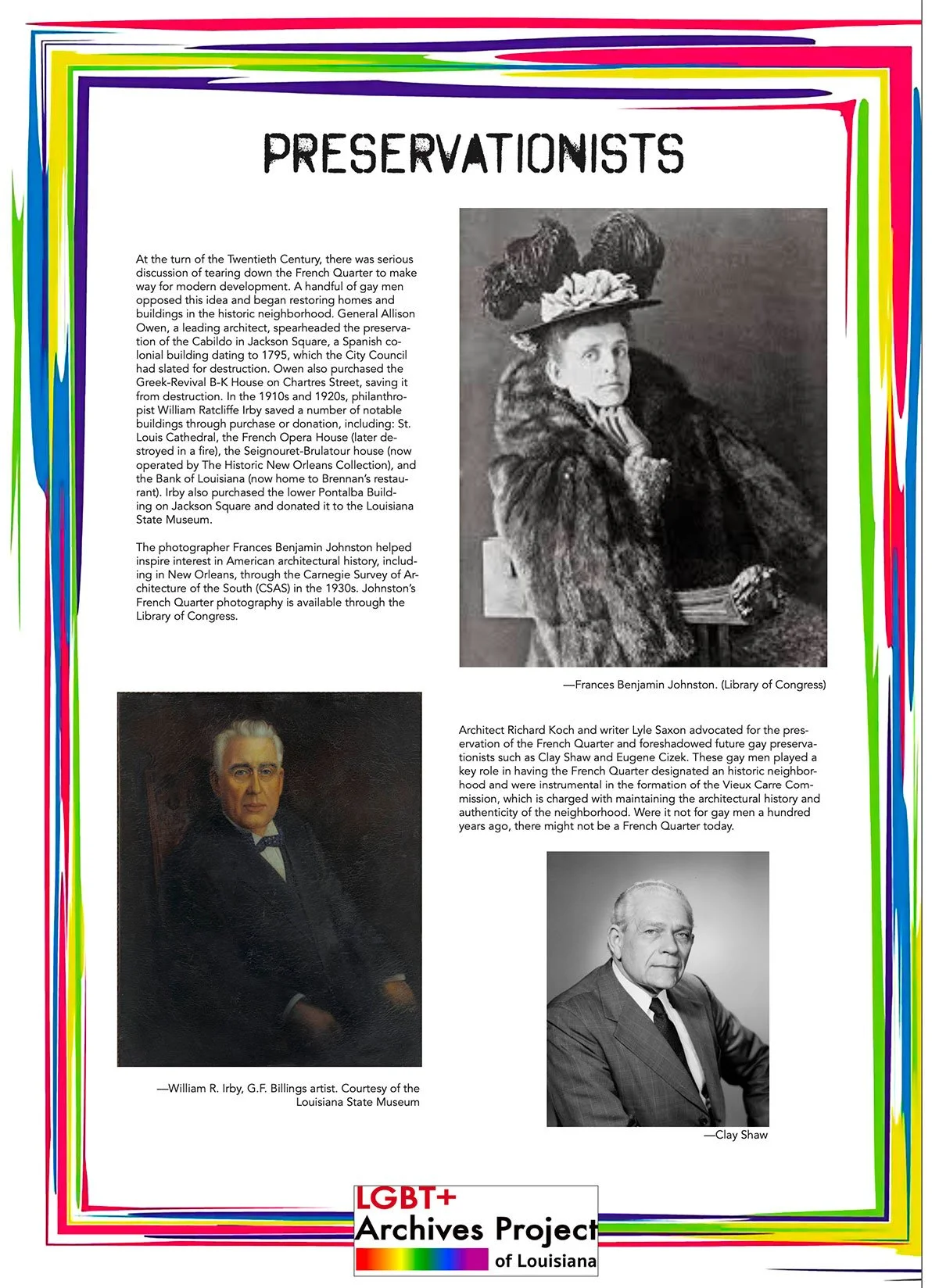
In New Orleans alone, the organization has placed LGBT+ cultural materials in Tulane University’s Amistad Research Center and Newcomb Archives, the Historic New Orleans Collection, New Orleans Public Library, Louisiana State Museum and others.
In their dedication to this process, the Archive has become an invaluable resource for researchers of Queer history in New Orleans, from grad students writing dissertations to authors, documentary filmmakers, and podcasters.
“I get several emails a month saying, ‘I’m working on A,B,C, what do you have?’ And I can tell them what’s available, where it is and who they need to talk to,” says Perez. “Not only are we preserving these collections and getting them placed, we are also doing public programming, and consulting. It’s a three-pronged approach.”
Before diving into the stacks at institutions across the state – from the Edith Garland Dupré Library at the University of Louisiana at Lafayette to the Northwest Louisiana Archives in Shreveport – one only need visit the LGBT+ Archives Project’s website for a wealth of information virtually at their fingertips.
In a well-appointed office behind the new exhibit, volunteers from Tulane University’s Service Learning Department now have more space to assiduously scan and organize all of the materials gathered over the years for the Project’s online collections.
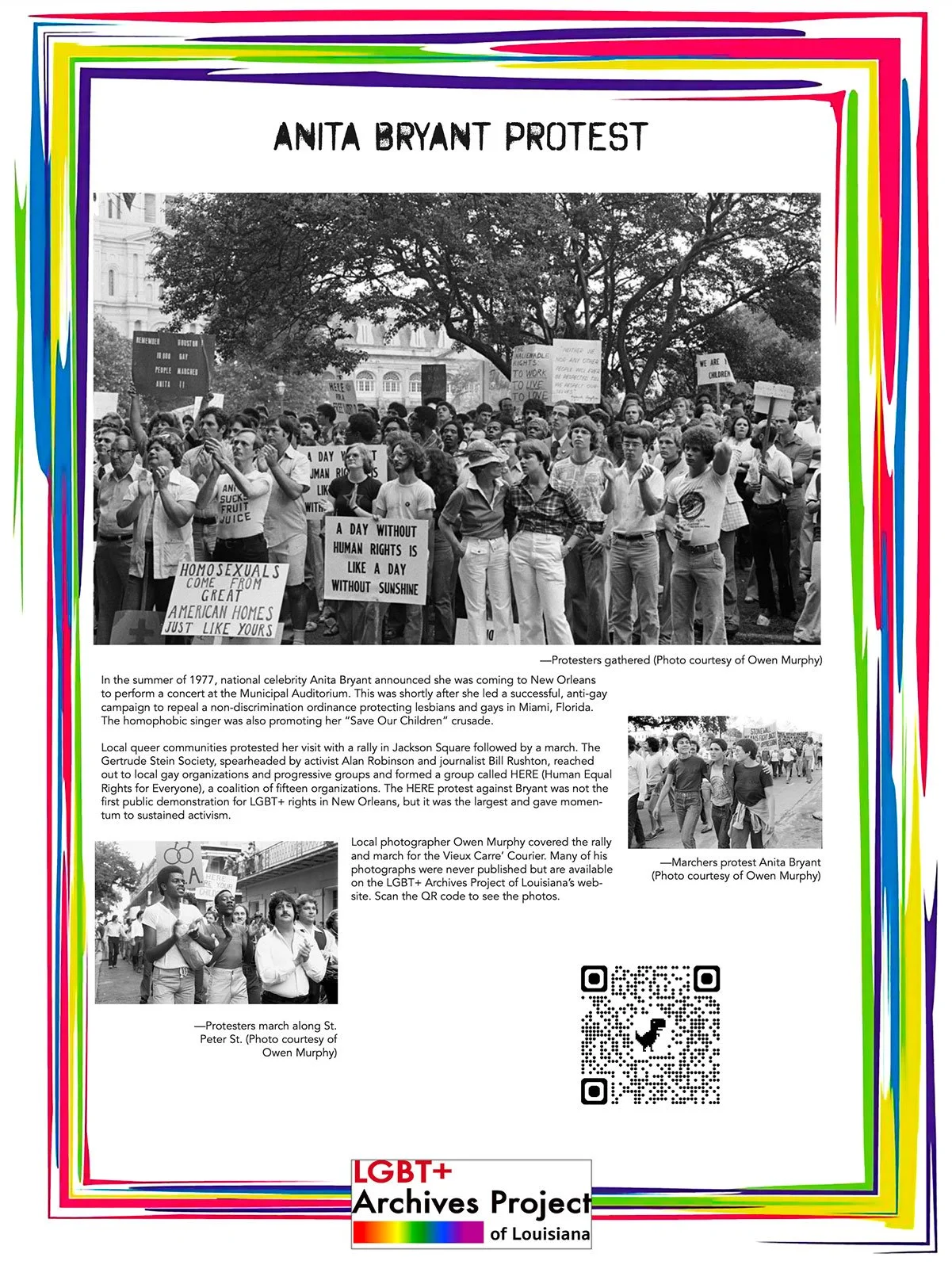
Documents include an image gallery of the 1977 Anita Bryant protest by photographer Owen Murphy, lost Queer bars in the French Quarter and Gay Carnival ephemera, and LGBT+ publications like Ambush Magazine and Impact (a now defunct LGBT+ themed newspaper). There are also video and audio archives.
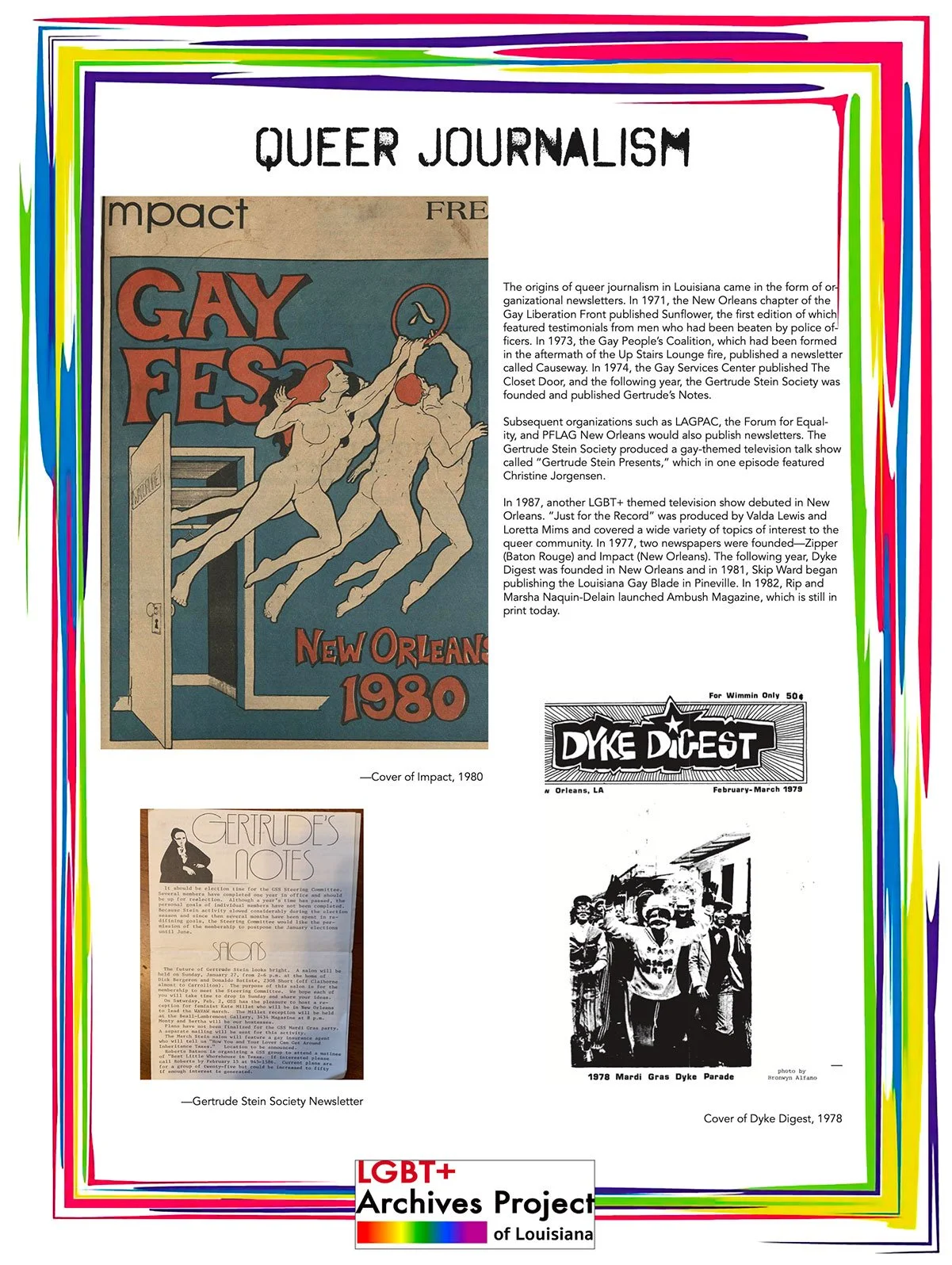
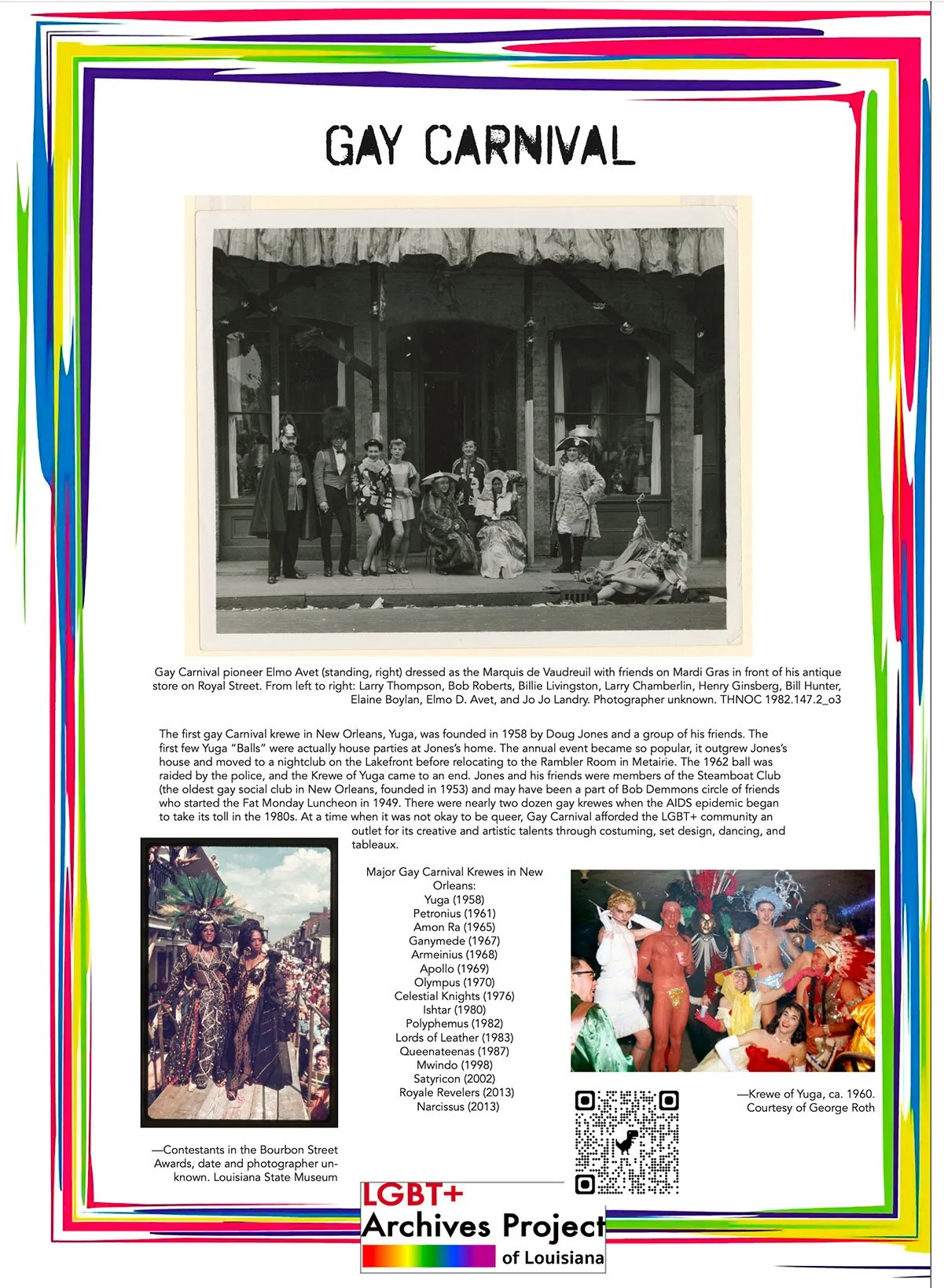
In 2019, the Archive opened a small exhibit and office space at 636 St. Ann Street, less than a block from Jackson Square. It wasn’t open long before the onset of the pandemic resulted in a shutdown of the Quarter.
“We didn’t have any foot traffic and we relied on walk-in donations. Without anybody in town, we couldn’t afford it,” explains Perez. “For the last 6 years, we’ve been hoping to open a space. We had a little hiccough last year when all of that anti-DEI stuff was coming out of Washington, so we weren’t able to procure grant money to open a new space.”
Always on the lookout for another storefront for their French Quarter exhibit, Perez discovered a space that had recently opened up on Burgundy Street. Bizarrely enough, the previous business, a t-shirt shop called Kulture Fashion, was operating as a front for a large narcotics and drug trafficking network. New Orleans agents successfully raided the storefront in October 2025, recovering more than $150,000 in drug proceeds, marijuana, fentanyl and illegal guns.
“I know the property manager and when it became available, I said we’ll take it!” laughed Perez. “They worked with us on the price and we got a good deal.”
Tumultuous retail history aside, the LGBT+ Archives Project of Louisiana has morphed the space into a fun and educational Queer History Exhibit, where admittance is free and donations are welcome – but not required. They also offer complimentary Queer history walking tours at 1:00 PM every Friday, Saturday and Sunday.
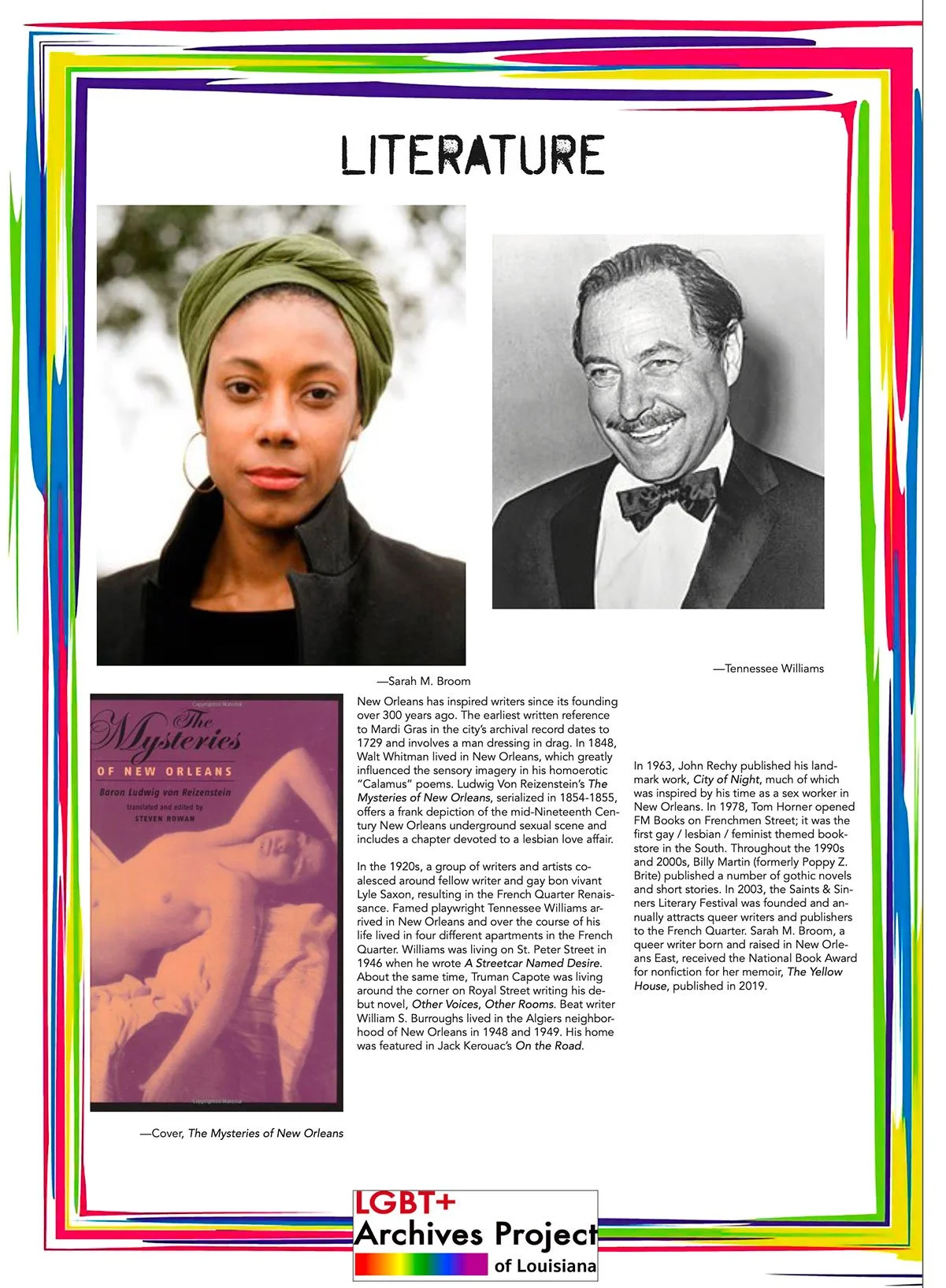
Creating a virtual archive, organizing and preserving LGBT+ materials gathered from across Louisiana, and now launching a Queer History Exhibit space replete with weekend history tours and consulting services is a proud accomplishment for the 13-member board, but it’s work that resonates deeply with Perez.
“Queer history is one of several histories that has been erased from the record. Indigenous history, Black history, women’s history … all these histories of marginalized groups and minorities have long been suppressed. We feel – especially now given the political climate – it’s really important to raise visibility and awareness.”
“As a longtime activist, I feel like memory work is a form of resistance. It’s important to me that people understand that we do have a history and there are lessons to be learned from it.”

*Article originally published June 2026 in the French Quarter Journal
**Photos by Ellis Anderson